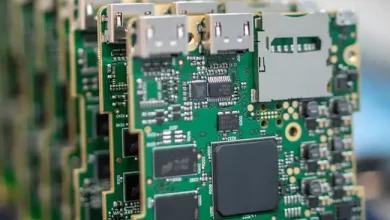
Top IoT Trends To Reshaping The Future of Business

The Internet of Things (IoT) is a term used to describe the ever-sophisticated web of connected devices that we live with.
The somewhat odd name is a reference on the idea that initial version of the internet was merely a computer network.
The internet expanded, and devices for office use, such as scanners and printers, and industrial equipment also joined the Internet.
Nowadays, nearly every device that we utilize at our workplaces, homes factories, or just wearables can be connected and online to the internet, resulting in the Internet is full “things.”
The 5 Biggest Internet Of Things (IoT) Trends In 2022
We had witnesses that in the pandemic situation, technology has helped the people for business continuity.
IoT is such kind of innovation which has changed the look of the business operations.
IoT is an emerging trend that drives the constant digitalization and datafication of our society in numerous surprising and innovative ways.
Autonomous vehicles, self-driving robots, the remote devices for medical care that help doctors examine patient’s conditions and even perform surgery can all be made possible thanks to the internet of connected objects.
In actuality, Ericsson predicts that by 2022 there will be approximately 29 billion of these devices connected to internet around the world.
Let’s take a look at what’s likely to be the most significant technology drivers and breakthroughs in this area in 2022:
IoT in Healthcare
With all that’s been going on around the globe over the past two years, it’s no surprise that healthcare has been among the most popular sectors in IoT development.
It’s certainly an extensive use case that covers everything from the use camera systems in public spaces to track people’s social interactions in the form of fitness bands, devices to track lifestyles, as well as the increasing use of remote healthcare and telemedicine.
Medical equipment that is specially designed, such as heart rate and blood pressure monitoring devices, insulin pumps wheelchairs as well as defibrillators and oxygen pumps, are often connected.
It can collect data that can help doctors better understand the condition and the lifestyle of the patient better, and operate autonomously to enhance user living quality.
Healthcare IoT devices enable medical professionals to gather data on the health of patients without the risk associated with the bringing of large numbers of contagious people together within close proximity.
Beyond the pandemic response cases However, they also enable doctors to assess, diagnose and treat a greater number of patients.
They also allow doctors to extend healthcare to areas that have access to physicians or hospitals is difficult because of distance or the difficulty of access.
Security
The huge increase in the number of devices that are connected to the internet implies that there’s an ever-growing amount of ways that technology could be compromised or exploited by people who are malicious towards us.
The volume and number of cyber-attacks are growing every year.
Security experts at Kaspersky claim that it was 1.5 billion cyber-attacks to IoT devices in the period from 2021’s first quarter and by 2022, that this trend will grow.
IoT devices are able to provide access for our networks, but they’re not always as safe as devices normally stored to store sensitive data like smartphones or computers.
Another risk factor is the fact that the IoT is comprised of “things”which are often tiny, light objects they can get lost or stolen, and require an additional security layer to guard against intruders who are able to gain physical access to your devices.
There is a shift in the way things are being done however, as there are evidence that companies are cleaning up in the area of supplying devices that come with default passwords and consumers are gaining an understanding of threats.
Most attacks are aimed at causing denial-of-service (DDOS) through overloading systems with connections which can cause them to fail and potentially expose data or “hijacking” computing power from devices.
This could be used to develop botnets that target different systems or to mine cryptocurrency.
IoT isn’t only an issue for security, however by collecting data on internet traffic and use connected devices can provide an energy source for algorithms employed to anticipate and block cyberattacks.
Edge IoT
Edge computing and the IoT work hand-in-hand. In simple terms, it’s creating devices that have on-board analytics capabilities.
That means that computing is performed closest to the origin of the data being analysed.
This is only relevant when it comes to cloud computing, in which data is gathered using essentially “dumb” sensors that include cameras of a basic type or microphones, then transferred to the cloud for analysed.
Edge devices utilize sensors that are smart, such as cameras with computers with computer vision capabilities or microphones equipped with natural language processing capabilities.
The obvious benefit is that computing is able to be performed quicker, and another benefit is that it reduces the amount of information transferred to the cloud and back reduces the network of congestion.
Another benefit is evident when considering security implications for the mass IoT devices.
If the device is collecting personal information and users are able to can rest assured that they can gain insights from the data they have gathered without leaving their personal data.
The main reason for this is the growing quantity of computing power that is accessible in ever smaller and more energy-efficient devices due to improved battery and user interfaces.
As more companies are looking to hybrid cloud ecosystems that can provide IoT solutions to clients edge computing will become more important as part in the process when there is the need to provide fast and secure data.
Business and Industry
Sometimes called the “industrial internet” the IoT will have profound implications for how we make goods and services, offer them to clients and follow-up with customer support.
It can also referred as Industry 4.0. This will be the big innovation till now.
Every business wants to stay ahed from the competition and this technology will be add the fuel in it.
Yes! You are hearing right!
Businesses should accept the connected device technology for empowering and enhancing the manpower.
Intelligent factories and logistics facilities are increasingly automated and the availability of robotics as well as IoT infrastructure “as-a-service” will mean that many smaller businesses are likely to begin taking advantage of the opportunities it offers in 2022.
Implementing IoT automated business processes into existing models provides companies with the opportunity to gain improved efficiency, while also gaining the benefit of data-driven insights into their processes and operations.
Wearable devices, such as AR and VR headsets are increasingly being used for (AR) and virtual reality (VR) headsets will frequently be utilized in various applications that include training as well as maintenance of equipment and simulating processes using ” digital twin” methods.
In manufacturing processes, IoT technology includes sensors connected to machinery to assess performance and facilitate the prediction of maintenance needs.
For example, what failures or breakdowns might take place before they occur to help repair and replace damaged equipment.
IoT tools also include the new technology of additive manufacturing including 3D printing that will offer new ways to design and design products.
It will also provide greater flexibility in personalization and customization as well as reducing production waste.
Support resilient Organizations
Resilience is a top priority in the agenda after the massive disruptions of the last two years.
IoT technology offers fantastic opportunities to create resilient and disaster-proof businesses.
This goes beyond security (covered in the previous paragraphs) as it includes measures like ensuring that an organization has the capabilities to handle massive changes.
We witnessed in 2021 and 2020, and also ensuring that the business doesn’t suffer because of the activities of competitors or markets.
Resilience in supply chain can be enhanced by IoT for instance, by monitoring the movement of inventory between a company.
As well as its suppliers and its customers in order to anticipate when delays might occur, and also offer contingency plans in the face of global challenges.
Monitoring tools that monitor the shifts of employees throughout facilities and track the efficiency of employees can help to identify the frequency of churn at work.
It can also identify areas when there is a shortage, or shortages, could mean that the business is in danger of facing difficulties.
IoT solutions that aid companies in predicting and responding to disruptions from a variety of sources will surely remain an area of significant innovations through the 2022-23 period and even beyond.
Moving Forward
So here are the top IoT trends that is changing the business operations. There is no wonder that in upcoming years every small industries will adopting the connected device technology to enhance their workflow.
By redefining the business model with the IoT technology, it can say that you will receive more ROI than you had predict!
We are living in a technological era and IoT is not a new normal. In the upcoming days, we can say that every small employee will have an idea about that.
Businesses should required a professional IoT app development firm to integrate the technology in their dail tasks.
You would need to do a research for choosing the best firm for IoT adoption.